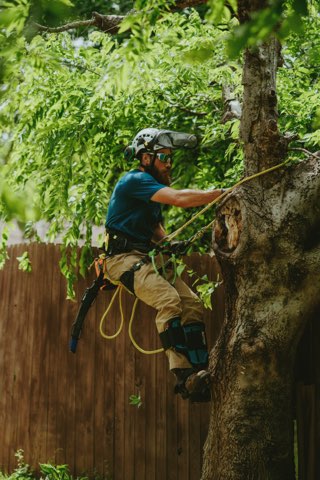
Tree Cabling and Bracing: Strengthening and Supporting Vulnerable Trees Apr 26, 2026
Tree cabling and bracing are proactive measures employed to address the risks associated with weak branches or trunks. These techniques help stabilize trees, mitigating the chance of breakage during storms or under the weight of heavy foliage. But when are these methods necessary, and how do they work?
Cabling is used primarily to alleviate stress on a tree's structural integrity. This process involves installing flexible steel cables high in the tree, connecting branches or stems at points of weakness. By doing so, the load is shared between branches, reducing the likelihood of individual branch failure. Cabling is an effective solution for large trees with sprawling limbs, where the weight distribution is uneven, posing a risk of splitting.
On the other hand, bracing addresses issues closer to the trunk or at critical junctures of branch connections. Whereas cabling employs flexible cables, bracing involves rigid rods installed through weak limbs or trunks to add stability. This method is particularly useful for managing acute angles between branches or preventing the splitting of tree forks.
At Blu-J Tree Care, we believe that proper assessment is the key to determining whether a tree requires cabling, bracing, or both. Our certified arborists evaluate the tree's health, structural weaknesses, and environmental factors to devise a tailored support strategy. Weak branch unions, split limbs, and signs of decay are typical indicators that a tree might benefit from these supportive techniques.
One common misconception is that cabling and bracing compromise the aesthetic appeal of trees. However, when done correctly, these methods are minimally invasive and hardly noticeable. Our tree care professionals ensure that every installation is as discreet as it is effective, blending seamlessly with the tree’s natural growth.
A significant advantage of tree cabling and bracing extends beyond mere physical support. By fortifying weak or predisposed trees, these techniques protect property and individuals from potentially dangerous falls. Additionally, preserving a tree’s structure contributes to its health, allowing it to flourish and continue providing essential environmental benefits such as air purification and shade.
While cabling and bracing are powerful tools, they are not permanent solutions. Trees continue to grow, and as they do, their needs change. Regular inspections by a qualified arborist are crucial to monitor the efficacy of the support systems and make necessary adjustments over time.
In conclusion, tree cabling and bracing play a critical role in maintaining the health and safety of your trees. At Blu-J Tree Care, we are committed to providing personalized, expert services that keep your green assets thriving for years to come. If you suspect a tree in your yard might be at risk, do not hesitate to reach out to us for a comprehensive evaluation. By investing in the strength and stability of your trees today, you are safeguarding the beauty and safety of your landscape for tomorrow.
/filters:no_upscale()/filters:format(webp)/media/130c91c3-0ee9-45c4-9f0b-d3c5ad8d4ccf.jpeg)